
The Sermon's Title: The Religion of Islam is a Religion of Purity
Themes of the Sermon:
1- Our Religion is a Religion of Purity
2- The Commandment of Purity and the Prohibition of Impurities
3- Legislations that Ensure General and Personal Hygiene
All praise belongs to Allah, who has perfected our religion for us, completed His favor upon us, and is pleased with Islam as our religion. I bear witness that there is no deity worthy of worship except Allah alone, without any partner, and I bear witness that Muḥammad is His servant and Messenger. May Allah grant him abundant peace and blessings.
To proceed: Fear Allah, O servants of Allah, with true mindfulness and piety, and remain conscious of Him in secret and in public.
يَا أَيُّهَا الَّذِينَ آمَنُوا اتَّقُوا اللَّهَ حَقَّ تُقَاتِهِ وَلَا تَمُوتُنَّ إِلَّا وَأَنْتُمْ مُسْلِمُونَ
“O you who believe, fear Allah as He should be feared and do not die except as Muslims [in submission to Him].” [Sūrat Āl ʿImrān: 102].
Servants of Allah:
Anas (may Allah be pleased with him) said: “I have never smelled any ambergris, nor musk, nor anything sweeter than the scent of the Messenger of Allah ﷺ. And I have never touched any brocade or silk that was softer to the touch than the hand of the Messenger of Allah ﷺ.” Reported by al-Bukhārī and Muslim.
Indeed, among the Names of Allah the Almighty are at-Tayyib (The Good/Pure), al-Quddūs (The Holy), and as-Salām (The Perfection/Giver of Peace). Allah loves good, pure things and detests filth. For this reason, He chose a good, pure Prophet for us who loved pleasant scents and cleanliness, and He legislated for us a beautiful, pure religion, half of which is cleanliness. As the Prophet ﷺ said: “Purity is half of faith.” Reported by Muslim.
Our religion is built upon the purity of belief—keeping it free from polytheism and idols. It is built upon the purity of the heart and actions—keeping them free from grudges and sins. It is built upon the purity of food—keeping it free from filth and unlawful gains. And it is built upon the physical purity of the body and clothes—keeping them free from impurities and dirt.
Allah the Almighty has informed us that He loves those who maintain both spiritual and physical purity, saying:
إِنَّ اللَّهَ يُحِبُّ التَّوَّابِينَ وَيُحِبُّ الْمُتَطَهِّرِينَ
“Indeed, Allah loves those who are constantly repentant and loves those who purify themselves.” [Sūrat al-Baqarah: 222].
Glory be to Him, He has legislated everything that makes a Muslim pure, clean, and neat within themselves, in their clothing, and in all their affairs.
He, the Almighty, made the five daily prayers obligatory upon the Muslim throughout the day and night, and He made purity a mandatory condition for them. This requires washing the body to lift major ritual impurity (such as after marital relations) and performing ablution (wuḍūʾ) to lift minor ritual impurity (such as after using the restroom). No prayer is accepted without purity, just as He, the Almighty, said:
يَا أَيُّهَا الَّذِينَ آمَنُوا إِذَا قُمْتُمْ إِلَى الصَّلَاةِ فَاغْسِلُوا وُجُوهَكُمْ وَأَيْدِيَكُمْ إِلَى الْمَرَافِقِ وَامْسَحُوا بِرُءُوسِكُمْ وَأَرْجُلَكُمْ إِلَى الْكَعْبَيْنِ وَإِنْ كُنْتُمْ جُنُبًا فَاطَّهَّرُوا وَإِنْ كُنْتُمْ مَرْضَى أَوْ عَلَى سَفَرٍ أَوْ جَاءَ أَحَدٌ مِنْكُمْ مِنَ الْغَائِطِ أَوْ لَامَسْتُمُ النِّسَاءَ فَلَمْ تَجِدُوا مَاءً فَتَيَمَّمُوا صَعِيدًا طَيِّبًا فَامْسَحُوا بِوُجُوهِكُمْ وَأَيْدِيكُمْ مِنْهُ مَا يُرِيدُ اللَّهُ لِيَجْعَلَ عَلَيْكُمْ مِنْ حَرَجٍ وَلَكِنْ يُرِيدُ لِيُطَهِّرَكُمْ وَلِيُتِمَّ نِعْمَتَهُ عَلَيْكُمْ لَعَلَّكُمْ تَشْكُرُونَ
“O you who believe, when you rise to [perform] prayer, wash your faces and your forearms to the elbows and wipe over your heads and wash your feet to the ankles. And if you are in a state of janābah, then purify yourselves. But if you are ill or on a journey or one of you comes from the place of relieving himself or you have contacted women and do not find water, then seek clean earth and wipe over your faces and hands with it. Allah does not intend to make difficulty for you, but He intends to purify you and complete His favor upon you that you may be grateful.” [Sūrat al-Māʾidah: 6].
When a Muslim establishes their prayer after doing this just as Allah commanded, they complete both their physical and spiritual purification. The Prophet ﷺ said: “Tell me, if there were a river at the door of one of you, in which he bathes five times a day, would any dirt remain on him?” The Companions replied, "No dirt would remain on him." The Prophet ﷺ then said: “That is the example of the five daily prayers; Allah wipes away sins through them.” Reported by al-Bukhārī and Muslim.
Allah also obligated the Muslim to keep their body and clothes clean from dirt and impurities, as He, the Almighty, said:
وَثِيَابَكَ فَطَهِّرْ
“And your clothing purify.” [Sūrat al-Muddaththir: 4].
The Prophet ﷺ informed us that failing to protect oneself and clean away impurities is one of the causes of punishment in the grave. He once passed by two graves and said: “Indeed, they are being punished, and they are not being punished for something difficult to avoid. As for one of them, he used to go around spreading malicious gossip. As for the other, he did not protect himself from urine.” Reported by Muslim.
Allah, Glory be to Him, praised the early Companions from the people of the Qubāʾ Mosque because they used to clean themselves with water after using the restroom. Regarding them, this verse was revealed, in which He, the Almighty, says:
لَمَسْجِدٌ أُسِّسَ عَلَى التَّقْوَى مِنْ أَوَّلِ يَوْمٍ أَحَقُّ أَنْ تَقُومَ فِيهِ فِيهِ رِجَالٌ يُحِبُّونَ أَنْ يَتَطَهَّرُوا وَاللَّهُ يُحِبُّ الْمُطَّهِّرِينَ
“A mosque founded on righteousness from the first day is more worthy for you to stand in. Within it are men who love to purify themselves; and Allah loves those who purify themselves.” [Sūrat at-Tawbah: 108]. Reported by at-Tirmidhī.
The Islamic legal prohibition against utilizing filth reached such a level that the Prophet ﷺ forbade eating the meat or drinking the milk of al-jallālah (animals that feed mostly on filth). In fact, he even forbade riding them. Al-jallālah refers to permissible livestock whose primary diet consists of impurities.
Our divine law also mandated that heavy impurity—such as the saliva of a dog—must be washed seven times, one of which must be with clean dirt. The Prophet ﷺ said: “The purification of the utensil of one of you, if a dog licks it, is to wash it seven times, the first of which is with dirt.” Reported by Muslim.
Furthermore, Islam legislated rulings that ensure general cleanliness and public hygiene in people's lives. The Prophet ﷺ forbade urinating in stagnant water (reported by Muslim), and he prohibited relieving oneself in public pathways or in the shade where people sit. The Prophet ﷺ said: “Beware of the two traits that bring curses!” The Companions asked, "And what are the two traits that bring curses, O Messenger of Allah?" He replied: “The one who relieves himself in the people's pathways or in their shade.” Reported by Muslim.
Allah the Almighty also commanded the purification of mosques, saying:
وَعَهِدْنَا إِلَى إِبْرَاهِيمَ وَإِسْمَاعِيلَ أَنْ طَهِّرَا بَيْتِيَ لِلطَّائِفِينَ وَالْعَاكِفِينَ وَالرُّكَّعِ السُّجُودِ
“And We charged Abraham and Ishmael, [saying], 'Purify My House for those who perform Ṭawāf and those who are staying [there] for devotion and those who bow and prostrate [in prayer].'” [Sūrat al-Baqarah: 125].
The Prophet ﷺ also commanded the cleaning of houses and their courtyards, distinguishing Muslims from the practices of the Jews. He said: “Clean your courtyards, for indeed the Jews do not clean their courtyards.” Reported by aṭ-Ṭabarānī.
The matter did not stop at the obligation of physical purity and the prohibition of touching filth; rather, Allah legislated what would make a Muslim clean, wholesome, and pure in their soul, body, and clothing. For this is the natural inclination (fiṭrah) upon which Allah has created mankind.
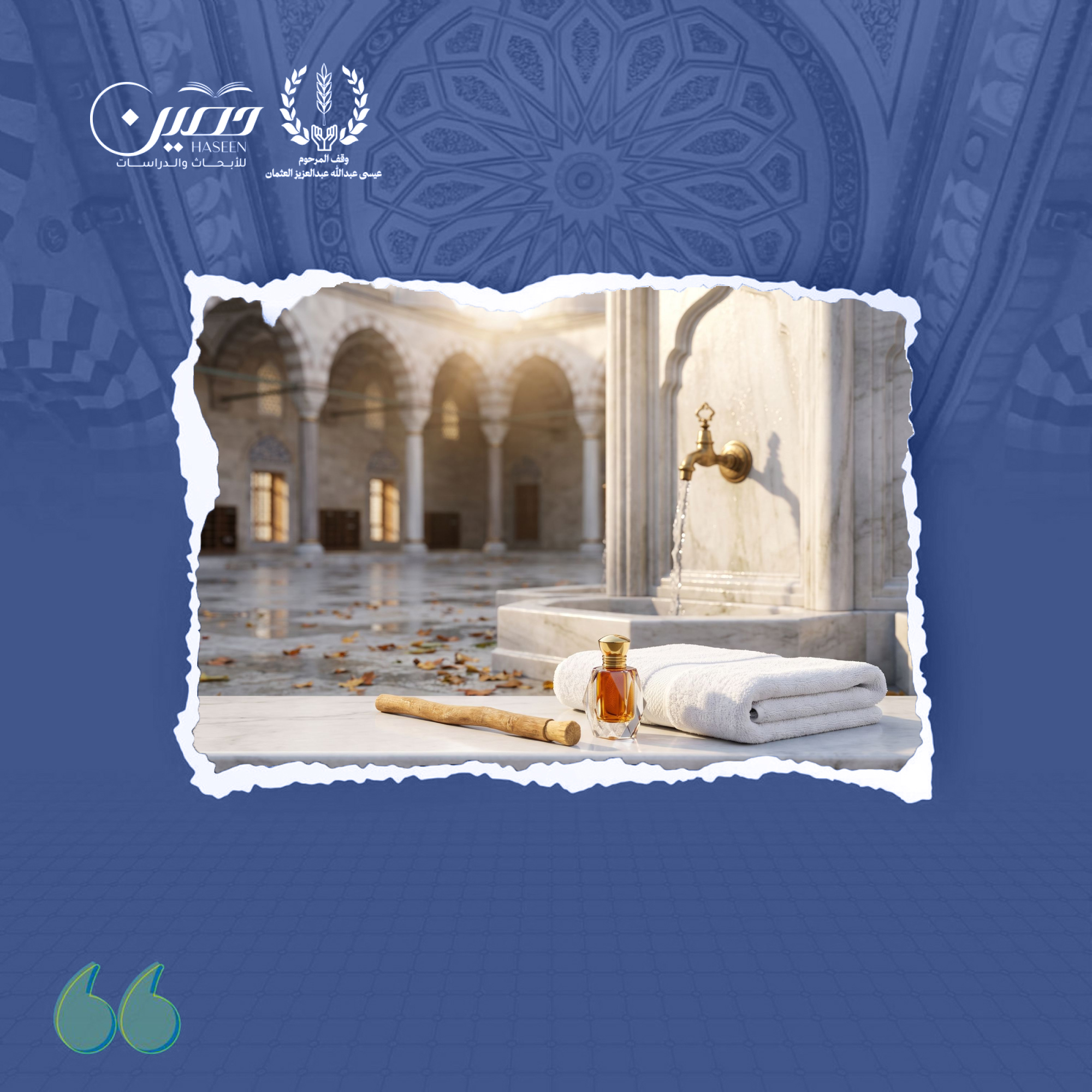
The Prophet ﷺ said: “Ten things are part of the natural inclination (fiṭrah): trimming the mustache, letting the beard grow, using the tooth-stick (siwāk), rinsing the nose with water, clipping the nails, washing the knuckle joints, plucking the armpit hair, shaving the pubic hair, and cleaning oneself with water [after relieving oneself].” Reported by Muslim.
The knuckle joints (al-barājim) refer to the finger joints where dirt can easily accumulate. Cleaning oneself with water (intiqāṣ al-māʾ) means istinjāʾ, which is using water to purify oneself after urinating or defecating.
Look at the beauty of this divine law! See how it has legislated things that keep the body clean from dirt and anything harmful, even commanding the removal of excess hair in areas where its accumulation could cause bad odors, or possibly lead to diseases and filth.
Islam also called for the cleanliness of the mouth and teeth. The Prophet ﷺ said: “The tooth-stick (siwāk) is a means of purifying the mouth and pleasing to the Lord.” Reported by an-Nasāʾī.
How beautiful is a religion that considers cleaning your teeth and freshening your mouth a means of gaining the pleasure of your Lord!
In fact, the Prophet ﷺ urged anyone who ate food with an unpleasant odor to stay away from the mosque so as not to disturb other Muslims. Jābir ibn ʿAbd Allah (may Allah be pleased with them both) said: “The Messenger of Allah ﷺ forbade eating onions and leeks. When we were overcome by hunger, we ate some of them. He then said: Whoever eats from this foul-smelling plant must not come near our mosque, for the angels are disturbed by the same things that disturb human beings.” Reported by Muslim.
The Prophet ﷺ also commanded taking a ritual bath (ghusl) to attend the Friday congregational prayer (Jumuʿah), saying: “Taking a bath on Friday is obligatory upon every person who has reached puberty.” Reported by al-Bukhārī and Muslim.
He did not stop there; rather, he encouraged extra care in cleaning oneself, wearing perfume, and putting on clean clothes instead of work clothes. He ﷺ said: “Whoever takes a bath on Friday, puts on his best clothes, applies some perfume if he has it, then goes to the Friday prayer and does not step over the necks of the people, then prays what Allah has decreed for him, and remains silent when the Imam comes out until he finishes his prayer—it will be an expiation for whatever sins occurred between that Friday and the previous one.” Reported by Abū Dāwūd.
The Prophet ﷺ also said: “What is wrong with any of you, if he can afford it, buying two garments for Friday other than his daily work clothes?” Reported by Ibn Mājah.
Islam has made maintaining a beautiful appearance, through clean clothes and tidy hair, a means of drawing closer to Allah. For He is the Most Beautiful, Glory be to Him, and He loves beauty.
A man came and asked the Prophet ﷺ, saying: “A man likes his clothes to look good and his shoes to look good.” The Prophet ﷺ replied: “Indeed, Allah is Beautiful and He loves beauty.” Reported by Muslim.
Jābir ibn ʿAbd Allah (may Allah be pleased with them both) said: “The Messenger of Allah ﷺ came to visit us and saw a disheveled man with messy hair. He said: “Could this man find nothing to tidy his hair with?!” And he saw another man wearing dirty clothes and said: “Could this man find no water to wash his clothes with?!” Reported by Abū Dāwūd.
May Allah bless me and you through the Great Qur'an, and benefit me and you through the verses and wise reminders it contains. I seek Allah's forgiveness for myself and for you, so seek His forgiveness; indeed, He is the All-Forgiving, the Most Merciful
The Second Sermon:
All praise belongs to Allah, and may peace and blessings be upon the Messenger of Allah, his family, his companions, and those who follow him. To proceed:
Servants of Allah:
Indeed, whoever observes those among the disbelievers who have gone astray and deviated from the natural inclination (fiṭrah) of Islam will find impurity both inwardly and outwardly. One will find atheists, idolaters, and Christians who have followed every male and female devil among the wicked and impure, and they have acquired a share of impurity accordingly. They do not practice circumcision, nor do they purify themselves from filth. They engage in uncleanliness, drink intoxicants, eat pork, and do not keep themselves away from impurities.
The disbelievers were astonished by the legislations of cleanliness in our religion—even the manners of relieving oneself—to the point that they envied us for it. Salmān al-Fārisī (may Allah be pleased with him) said: “The polytheists said to us, 'I see that your companion [the Prophet] teaches you everything, even how to relieve yourselves!' So Salmān replied, “Yes, indeed. He has forbade any of us to clean ourselves after defecating using the right hand, or to face the Qiblah (direction of prayer). He also forbade using animal dung or bones, and said: None of you should clean himself using fewer than three stones.” Reported by Muslim.
A religion with such a high standing has undoubtedly provided complete and healing guidance in clarifying every matter, both small and large. It is inconceivable that it would neglect anything people need—whether in matters of creed (ʿaqīdah) and thought, worship and spiritual purification, politics and warfare, economics and transactions, society and family, or morals and conduct—without providing a complete, detailed explanation. It established everything on the legislation of what is good and pure, and rejected everything that is wicked and corrupt.
Therefore, O Muslim, take pride in your religion which Allah has legislated, rejoice in your belonging to it, praise Allah, and ask Him for steadfastness upon it. Be as Allah loves for you to be: pure, beautiful, wholesome, and clean—in your creed and actions, your heart and appearance, and your clothing and body.
O Allah, aid us and do not aid others against us; grant us victory and do not grant victory over us; plan for us and do not plan against us; and grant us victory over those who transgress against us.
O Allah, grant our souls their mindfulness and piety, and purify them, for You are the best to purify them; You are their Guardian and their Master.
O Allah, grant us safety in our homelands, rectify our leaders and those in authority over us, and place our leadership under the care of those who fear You, remain mindful of You, and seek Your pleasure.
O Allah, be with our oppressed brothers and sisters in Gaza and everywhere, and decree for them a near victory and relief.
Servants of Allah: Remember Allah with much remembrance, and glorify Him morning and afternoon. And our final call is: All praise belongs to Allah, Lord of the Worlds.